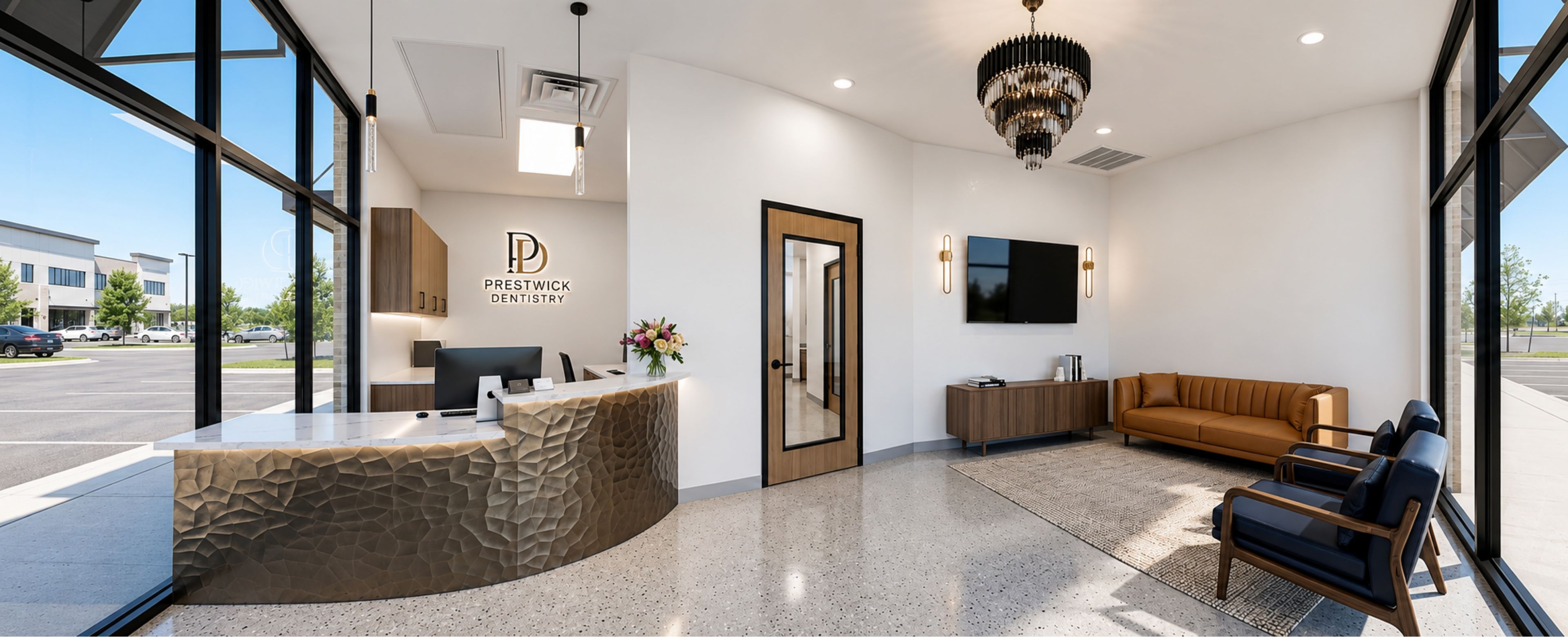
Sedation Dentistry in McKinney: Care Without the Dread
Maybe you've been putting off that appointment, maybe a few months, maybe a few years. The thought of the chair, the sounds, the uncertainty of not knowing what comes next is enough to keep the phone in your pocket. If that feeling describes you, then you should know that sedation dentistry exists for exactly that feeling.
It lets you get the care your teeth need while your body stays calm, turning a visit into something you simply get through rather than something you spend days dreading.
At Prestwick Dentistry, Dr. Alekhya Patagarla and her team work with anxious patients all the time, right here in McKinney. Whether you've been putting off a routine cleaning or you're facing something longer like a root canal, we'll match the right level of comfort support to where you actually are. And nobody here is going to say a word about how long it's been since you went to the dentist.
If you'd like to talk it through before committing to anything, call us at (682) 253-5492 or request an appointment. A conversation costs you nothing and often takes most of the fear out of the equation.
Quick Takeaways
- Ask us which comfort option fits your visit. Lighter and deeper approaches feel very different, and the right one depends on the procedure and on you.
- Bring your full medication list and health history to the consultation, since that conversation helps us figure out whether sedation is the right fit for you.
- Plan your ride ahead of time. Some options clear within minutes, while others mean a trusted adult should drive you home.
- Ask for your cost estimate and a benefits check before you're scheduled, so nothing on the bill catches you off guard.
- Tell us about any difficult appointment you've had in the past. It genuinely changes how we plan your visit.
How Sedation Dentistry Works, Step by Step
One of the things that makes dental anxiety worse is simply not knowing what's coming. When you can picture the visit ahead of time, a lot of that tension starts to ease. Here's how a comfort-focused appointment generally unfolds with us.
1. We talk first, before anything is scheduled
Before anything is booked, Dr. Alekhya sits down with you to go over your health history, your medications, and what specifically makes dental visits hard for you. Some people dread the needle. Some can't stand the sounds. Some had one difficult experience years ago and never went back. Those are all different situations with different solutions, and figuring out which one applies to you is exactly where we start.
2. We match the approach to the appointment
Once we have a clear picture of what you're dealing with, we find the right fit. A lighter, inhaled option keeps you awake and relaxed with the edge taken off, and it clears within minutes of the mask coming off. A deeper oral option means taking a dose before your visit, arriving already at ease, and remembering very little of the appointment afterward. More involved treatment usually calls for the deeper end of that range, while a routine cleaning often doesn't need it at all.
3. You get clear instructions before the day
If you're taking something before your visit, you'll know exactly when to take it, whether to eat beforehand, and who needs to drive you. We send all of that home with you in writing rather than just saying it at the end of an appointment, so nothing gets lost between now and then.
4. We monitor you the whole way through
Once you're settled in the chair, treatment begins. You stay aware enough to answer a question or raise a hand if you need a moment, and we check on you continuously throughout. If you need us to stop, we stop. That's not a favor we're doing you; it's just how we work.
5. You recover and go home with a plan
When the appointment wraps up, we keep you with us until we're confident you're steady on your feet. You leave with written aftercare instructions, and someone from our team walks you out and hands you off to your driver in person. We also follow up with a call the next day, just to hear how the night went.
What Sedation Actually Does for You
The most immediate thing sedation does is break the avoidance cycle. Small problems that get skipped have a way of becoming big ones, and sedation is often what finally gets a long-postponed cavity or root canal handled before it turns into something urgent. Beyond that, long appointments stop feeling long.
There is a physical benefit too. When your body is relaxed, it is simply easier to treat. Less clenching, less flinching, and a calmer patient overall means Dr. Alekhya can do more precise work, and that precision really matters on detailed cosmetic procedures. If a stubborn gag reflex has made impressions, x-rays, or back-molar work difficult in the past, being genuinely relaxed makes all of that far more manageable.
We hear it often after a sedation visit: "That wasn't bad at all." One calm appointment has a way of quietly changing what your mind and body expect the next time around.
Who Sedation Is Right For
You don't need a diagnosis or a dramatic story to qualify. If any of this sounds like you, it's worth a conversation:
- Dental fear, or a past appointment that left you dreading the chair
- A strong gag reflex that makes impressions, x-rays, or back-molar work hard to finish
- Numbing that never seems to take fully, or takes more than usual
- A longer visit ahead, or several procedures grouped together, such as root canal treatment or general dentistry work done in one sitting
- Sensory sensitivities that make a typical dental setting overwhelming
- Simply wanting a calmer visit, even if your nerves are mild
That list covers a wide range, and that's intentional. Sedation isn't the right fit for everyone, though. Certain medical conditions, some medications, pregnancy, and airway or breathing concerns can rule it out or change the approach.
Timeline and What to Expect on the Day
Most sedation visits with us follow two appointments: a consultation first, then the treatment visit itself. The consultation is relaxed and unhurried, usually well under an hour, and includes any imaging we need. Our digital x-rays and cone beam scans give Dr. Alekhya a clear picture of what's happening below the surface, so your treatment plan is fully worked out before you ever sit down in the chair. Nothing gets figured out on the fly once you're already there.
How long your treatment visit runs depends on the dental work itself, but which sedation option you choose shapes what the rest of your day looks like. A lighter approach adds only a few minutes at the start and clears almost as quickly at the end, so most people drive themselves home and pick right back up with their day. Deeper oral sedation feels quite different. You'll arrive already relaxed, the appointment will feel much shorter than it actually is, and the grogginess tends to fade over several hours, so it's worth keeping your schedule clear for the day.
Preparing Beforehand and Recovering Afterward
Before your visit
- Follow your eating and drinking instructions exactly. For oral sedation, this usually means fasting for a set window before your appointment, and we will tell you exactly how long that is when we confirm your visit.
- Let us know about every medication and supplement you are taking, including anything over the counter. Even things that seem minor can matter, so the more we know ahead of time, the better we can take care of you.
- If you are having oral sedation, plan to have a trusted adult drive you and stay with you for a little while after you get home. The sedation keeps working its way out of your system after the appointment ends, so having someone with you is an important part of staying safe.
- Wear something comfortable and loose, with short sleeves if you can. It makes it easier to place the monitoring equipment and helps you feel relaxed rather than restricted during your visit.
- Try to keep the rest of your day open. Even if you feel better sooner than you expect, giving yourself that breathing room makes the whole experience a lot easier.
After your visit
- Once you are home, take it easy and drink plenty of water. When you feel ready to eat, start with something light rather than jumping straight into a full meal.
- Hold off on driving or anything that needs sharp focus for the rest of the day after oral sedation. The grogginess has a way of lingering a little longer than it feels like it will, so it is worth giving yourself the time.
- We will send you home with written aftercare instructions specific to your treatment, so you will always have something to refer back to. And if anything feels off or you have a question, just call us. That is exactly what we are here for.
Cost and Payment For Sedation Dentistry
Sedation is billed separately from the dental treatment itself, and what you pay depends on which option you use and how long your appointment runs. A lighter inhaled option and a full oral sedation visit are in different price ranges, so the best way to get a real number is to talk through your specific plan with us.
Whatever that number turns out to be, you'll have your estimate in hand before anything is scheduled, not after. Some dental insurance plans do help cover sedation, especially when there's a clear reason it's needed, and we're happy to check your benefits ahead of time so nothing catches you off guard. If cost is a concern, just say so early on.
We'd much rather work around your budget than have you put off care you actually need. To talk through the numbers, give our McKinney office a call at (682) 253-5492 and we'll go over what makes sense for your treatment plan. And if you're still figuring out whether sedation is even the right choice for you, Dr. Alekhya is happy to walk you through it first, no pressure, just a conversation.
Why McKinney Patients Trust Us With Anxious Visits
Dr. Alekhya has practiced dentistry for over 13 years, first in India and then here in Texas after earning her DDS from the University of Southern California. She takes more than 100 hours of continuing education every year, and her advanced training in endodontics means that complex work like root canals happens right here, with the same team and the same comfort plan, rather than being sent to a different office across town. For an anxious patient, that kind of consistency makes a real difference.
She brings that same ease into the room from the very first moment. She'll tell you her name is simpler than it looks: I-LIKE-YA, said fast, in a Texan accent. It's a small, warm detail that tends to put people at ease within the first couple of minutes, and we think it says a lot about how she approaches the whole visit. You can read more about Dr. Alekhya and how she practices.
Beyond her credentials and her warmth, it really does come down to the details. Instruments come out of sealed sterilization pouches that are opened right in front of you, each one dated so you can see it for yourself.
The room stays quiet and calm rather than loud and clinical. And after longer procedures, Dr. Alekhya offers a TMJ massage, something that grew out of patients telling her, more than once, that she has healing hands. She took that seriously enough to get certified in Reiki because of it.
Frequently Asked Questions
Will I be unconscious?
Not at all. The options we use in our office keep you awake and aware the whole time. You can answer a question or raise a hand if you need us to pause. The feeling is more calm and floaty than anything else, and with deeper sedation most people simply don't remember much of the appointment afterward, which a lot of patients find to be a relief.
Is sedation dentistry safe?
For most healthy adults, yes, and it is used routinely in dental offices all over the country. The key to keeping it safe is careful screening and close monitoring throughout your visit, which is exactly why we go over your health history and medications before anything is scheduled. We want to make sure it is the right fit for you before we ever move forward.
Will I feel any pain?
Sedation takes care of anxiety, and local anesthetic takes care of sensation, so the two work together rather than one replacing the other. You will still be numbed for anything that requires it. What sedation does is make receiving that numbing easier and more comfortable, so the whole experience tends to feel much more manageable from start to finish.
Can my child receive sedation?
Children's comfort is handled a little differently, and the right approach really depends on your child's age, overall health, and what treatment is needed. Bring your questions to a consultation and Dr. Alekhya will walk you through what she would honestly recommend for your child specifically. You can also read more about our approach to pediatric dentistry on our services page.
When You're Ready, We're Here
Picking up the phone is usually the hardest part, and if you've been thinking about it for a while, that makes complete sense. Nobody at Prestwick Dentistry is going to make you feel bad about the wait. We work with anxious patients all the time, here in McKinney and from communities all around North Texas, and we know that getting here is often the biggest step.
When you're ready, call us at (682) 253-5492 or request a visit and we'll take it at your pace from there. Whether it's a routine cleaning or something more involved, our full range of services is handled right here with Dr. Patagarla, so you won't be passed around or sent somewhere unfamiliar.
Welcome Home!
Call
(682) 253-5492
or request an appointment online to set up your first visit. We’ll be in touch soon.